Majid Majidi Takes Aim at US War Talk as New Movie Rocks Busan
Oscar-nominated Iranian director Majid Majidi nearly skipped the Busan Film Festival, but showed up to blast US war threats while premiering Midday Meal.
 By Marla Devine
15 October 2026 · Reported first by The Hollywood Reporter
The key facts
- Director Majid Majidi attended the Busan Film Festival after nearly boycotting the trip.
- Majidi used his appearance to publicly denounce US war threats against Iran.
- The filmmaker stressed the brutal impact that foreign conflict has on regular Iranian civilians.
- His latest feature, Midday Meal, debuted at the festival to major critical praise.
- Majidi previously earned Iran's first Best Foreign Language Film Oscar nomination for Children of Heaven.
What happened at the festival
Majid Majidi almost stayed home.
Asia's biggest cinema bash, the Busan International Film Festival, was getting underway in South Korea. The celebrated Iranian director had a brand-new movie on the slate, a project titled Midday Meal. But as he told reporters on the ground, packing his bags felt entirely wrong with tensions boiling over back home.
He nearly pulled the plug. At the eleventh hour, Majidi changed his mind. He boarded the flight because he had something urgent to say, and he wanted an international room full of cameras to hear every word.
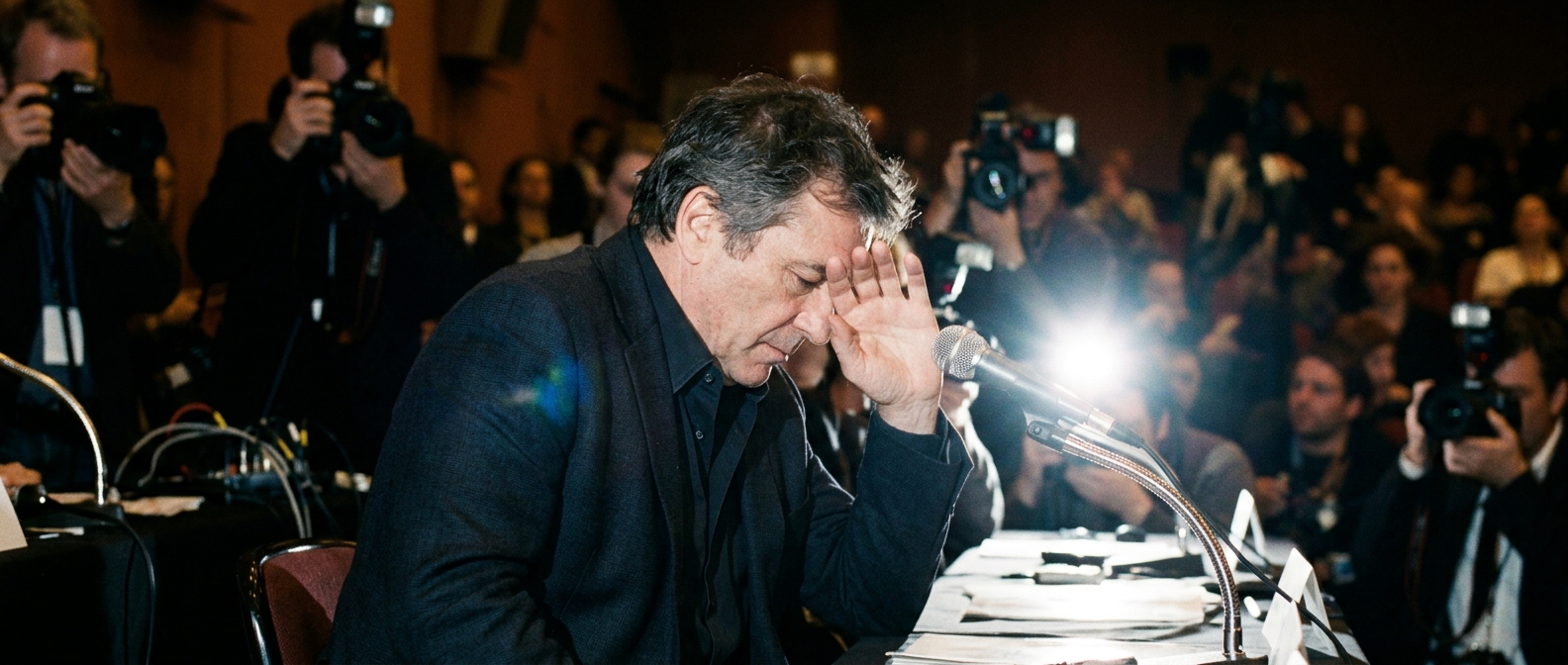
Once he took the stage, Majidi didn't stick to polite film-circuit pleasantries. He took direct aim at Washington's rattling sabres and the threat of American military strikes. As reported by The Hollywood Reporter, the filmmaker used his platform to pull the curtain back on what war talk actually does to regular people trying to survive day to day.
It wasn't your standard red-carpet chatter. It was fierce, direct, and impossible to ignore.
Why he nearly skipped the trip
Let's be honest: film festivals love glitz. Red carpets, flashbulbs, champagne flutes, polite applause. But Majidi made it clear right away that he was not in the mood for an easy victory lap.
With military threats hanging over Tehran and tensions between Iran and the United States running red-hot, the director felt torn. Sitting in a plush cinema thousands of miles away while his neighbours lived with constant dread felt hollow. He openly admitted that showing up felt weirdly trivial compared to what people back home face right now.
In the end, though, silence wasn't going to help anyone. Majidi figured out pretty quickly that staying home in protest would just waste an open microphone. If the world was going to give him a stage, he was going to use it to talk about real human lives rather than just sound mixing and camera lenses.
So he flew across the globe, stood up in front of the press, and made sure everyone stopped talking about red-carpet fashion for five minutes.
What Majidi actually said on the ground
When Majidi got to the microphone, he didn't mince words. He called out American foreign policy and the reckless talk of war that treats an entire country like a dartboard on a war-room wall.
His message was simple: when world leaders start talking about dropping bombs, it isn't governments that pay the highest price. It's the butcher, the teacher, the schoolkid, and the family trying to put bread on the table. Majidi pointed out that ordinary Iranians are already crushed under punishing economic sanctions, and the threat of actual missiles makes daily life an absolute pressure cooker.
He wanted the global crowd in Busan to remember that Iran isn't just a talking point on evening news broadcasts. It's eighty-odd million real human beings.
According to The Hollywood Reporter, his speech landed like a thunderclap in the room. In an industry where people usually thank their agents and promote their next streaming deal, seeing an Oscar-nominated veteran lay out the raw human toll of imperial bluster stopped everyone in their tracks.
The movie everyone is buzzing about
While his fiery press comments stole the headlines, Majidi's new work backed up every single word. His latest effort, Midday Meal, quickly turned into one of the biggest talking points of the whole festival.
If you know Majidi's track record, this shouldn't come as a massive shock. Back in 1998, he put Iranian cinema right at the centre of the global map with Children of Heaven, which became the first Iranian title to snag an Oscar nomination for Best Foreign Language Film. He has spent decades telling stories about working-class kids, struggling parents, and the quiet dignity of people whom the rest of the world ignores.
Midday Meal walks right down that same path. It zeros in on ordinary domestic struggle, focusing on the kinds of quiet, devastating human moments that war machines simply erase.
Critics at the festival snapped to attention. By the time the credits rolled, the buzz in Busan was that Majidi had delivered yet another masterclass in empathy.
How the room responded
The reaction inside the festival halls was swift. Busan has always prided itself on being a hub for bold Asian voices, but even by its own standards, this was a standout moment.
Audiences and critics lined up around the block to catch Midday Meal, and the contrast between the screen's gentle storytelling and Majidi's sharp political broadside gave the whole premiere a rare intensity. You don't often see a press room shift from basic questions about casting to heavy discussions about war, peace, and civilian trauma in the blink of an eye.
Other filmmakers in attendance took note. It's easy for cinema gatherings to drift into self-congratulatory bubbles, but Majidi popped that bubble instantly.
He reminded everyone in Busan why independent cinema exists in the first place: to bear witness to the people who never get invited to the summit tables.
What happens next
Now that Midday Meal has made its splash in South Korea, the picture starts its march across the international circuit. Film distributors and programmers are circling, especially with early reviews calling it one of Majidi's sharpest works in years.
Meanwhile, the geopolitical chill isn't going anywhere. Majidi is heading back home, but his comments in Busan are still echoing across entertainment wires.
He took a massive gamble by turning a premiere into a platform for peace. Instead of playing it safe and smiling for the cameras, he put real lives front and centre. In doing so, he made sure nobody left Busan thinking Iran is just another foreign policy headache—and he proved once again why his voice carries so much weight.
How it unfolded
Early October 2024
Majid Majidi considers skipping the Busan Film Festival due to escalating military tensions around Iran.
Festival premiere
Majidi arrives in South Korea to debut his new movie Midday Meal.
Festival press briefing
The director speaks directly to international reporters, slamming US war talk and defending Iranian civilians.
Why this matters
Majid Majidi remains one of Iran's most respected cultural exports. By choosing an Asian festival spotlight to confront American military threats head-on, he used his artistic capital to force world cinema to look directly at the human fallout of international conflict.
More on
Your questions answered
- What did Majid Majidi say at the Busan Film Festival?
- Majidi spoke out against American war threats, arguing that ordinary Iranian civilians bear the brunt of military posturing and foreign aggression.
- Why did Majid Majidi almost skip Busan?
- He felt conflicted about attending a celebratory film event abroad while tensions and the threat of war weighed heavily on people back home.
- What is Majid Majidi's new movie called?
- His latest film is titled Midday Meal, which screened to strong critical praise at the Busan International Film Festival.
- Which famous movie made Majid Majidi an Oscar nominee?
- Majidi earned an Academy Award nomination for his 1997 drama Children of Heaven, the first Iranian film ever nominated for the foreign language prize.
- Where does the Busan International Film Festival take place?
- The festival takes place every autumn in the coastal city of Busan, South Korea, standing as Asia's top film gathering.
- How did critics receive Midday Meal in Busan?
- Critics and festival attendees praised the drama, with the film quickly emerging as one of the major standouts of the event.
- Who reported Majid Majidi's comments in Busan?
- The Hollywood Reporter covered Majidi's statements during the festival, noting his sharp rebuke of US warmongering.